


Prince Khayr Bey: The Story of the Treachery of the Circassian Sultans
- Dr Ali M. Kasht
- Dec 8, 2025
- 2 min read
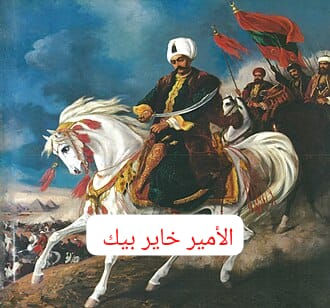
Prince Khayr Bey, whose origins trace back to Abkhazia, was one of the most prominent princes of the Circassian sultans, and he played a pivotal role in the fall of the sultanate in Egypt and its surrender to the Ottomans. When Sultan al-Ghuri met the Ottomans in the Battle of Marj Dabiq on Sunday, 25 Rajab 922 AH / 24 August 1516 AD, the sultans’ soldiers displayed great courage and almost achieved victory, to the point that Sultan Selim I considered withdrawing. But a decisive moment turned the tide of the battle: Khayr Bey withdrew his forces and joined the Ottoman army, along with some other commanders, after spreading a rumor of Sultan al-Ghuri's death. This led to a collapse in the morale of the Sultan's army, and Sultan al-Ghuri was killed on the battlefield, never to be seen again. Khayr Bey continued his role after the Battle of Marj Dabiq, sowing discord among the Sultan's commanders. He played a major role in the final fall of the Sultanate after the Battle of Ridaniya. As part of his reward, Sultan Selim I appointed him governor of Egypt, where he ruled for five years and three months. His reign was marked by cruelty and violence, and the country's situation deteriorated further. His interests clashed with those of Janbirdi al-Ghazali, the governor of Damascus, who declared his rebellion during the reign of Sultan Suleiman the Magnificent and attempted to establish an independent state in Syria. However, he failed after attempting to capture Aleppo on 14 Dhu al-Hijjah 926 AH / 25 November 1520 AD, as Khayr Bey refused to cooperate with him. The Ottomans defeated him and beheaded him in 927 AH / 1527 AD In 1521 AD, Prince Khayr Bek, of Abkhazian origin, died in the year 928 AH / 1521 AD, leaving behind a history full of controversy, between those who consider him a traitor and those who see his rule as a crucial period in the history of Egypt and the Ottomans.
Comments